
Lip Blushing 101
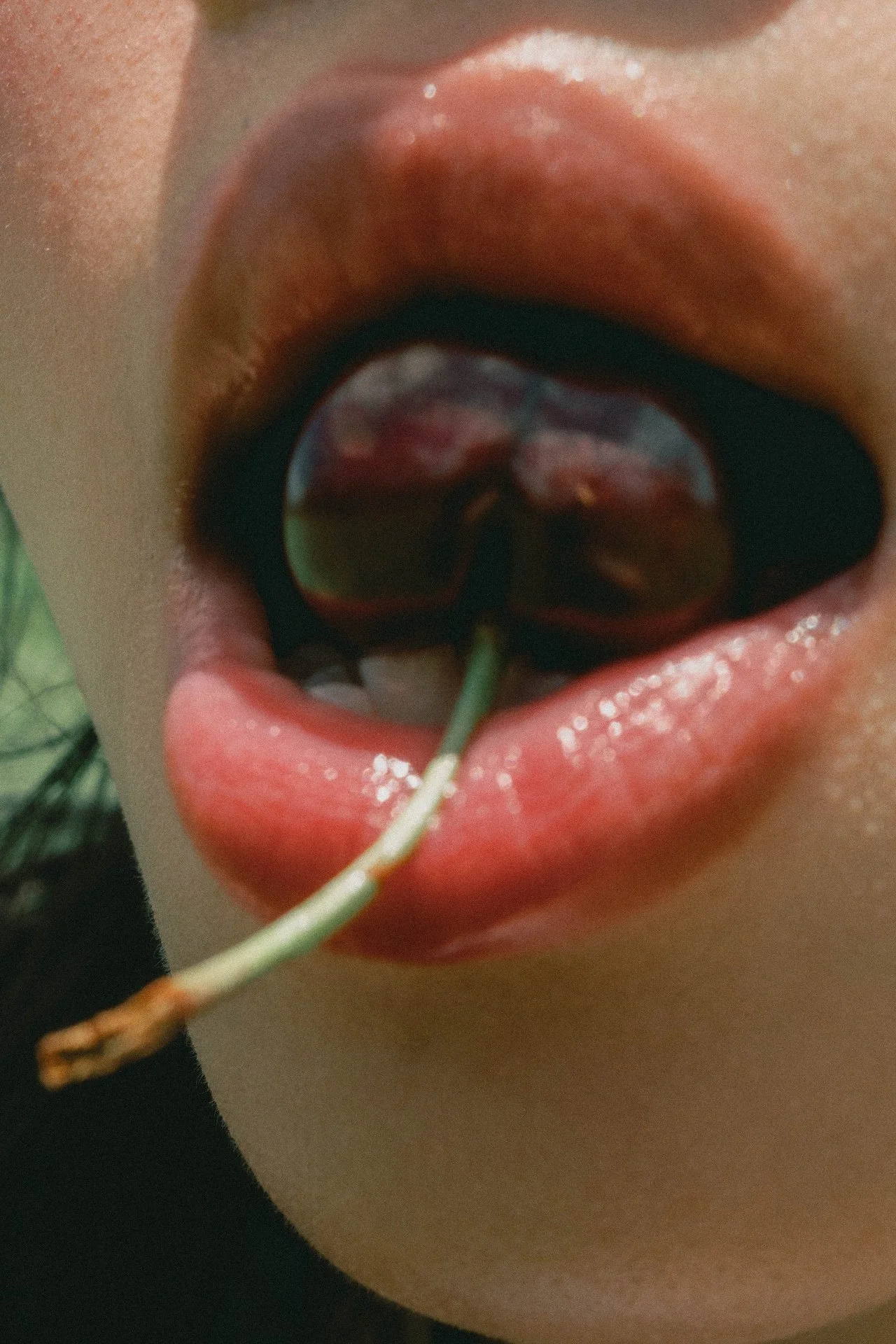
Somewhere between "I'll just do a little tint" and "why do I own eleven nearly identical rosy nudes," most of us arrive at the same question: what if my lips could just… look like this, on their own, at 6:45 a.m., in the kitchen, with no mirror involved?
That is the entire pitch for lip blushing. It's the one permanent-makeup treatment people whisper about in our LA bungalow like it's a secret, and then come back three weeks later acting like they invented it. So let's put the whole thing on the table: what it is, what it costs, whether it hurts, how it heals (day by day, with the ugly parts included), and how to know if you're a good candidate.
What is lip blushing?
Lip blushing is a semi-permanent cosmetic tattoo that deposits sheer, custom-blended pigment into the lips to enhance their natural color, define the lip line, and even out tone. It heals to a soft, "just-bitten" tint rather than a lipstick finish, and typically lasts two to three years before fading.
Think of it less as lipstick and more as the world's most committed lip stain. Nobody should be able to point at your mouth and say "oh, you had that done." They should say "have you been sleeping well?" Which, given the rest of this blog, we'd love for you to be.

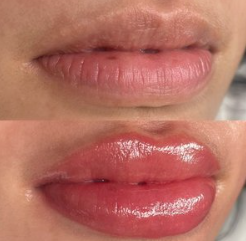

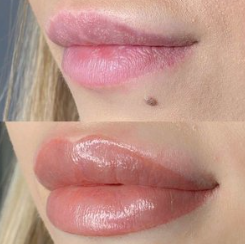
Lip blushing vs. lip liner tattoo vs. lip filler
People lump these together but they are three different treatments.
Lip blushing is about color and definition. It does not add volume. What it does do is create the optical illusion of fuller lips, because a defined edge and a warmer, more even tone read as "more lip" to the human eye. Your lips will look fuller. They will not be fuller.
Permanent lip liner is the early-2000s ancestor: a hard, drawn-on outline, usually darker than the lip itself. Modern lip blushing is a full-lip wash of color with a soft, shaded edge. If you're picturing your aunt's magenta outline, please release that image. We have.
Lip filler is injectable volume. Different practitioner, different appointment, and if you're planning both, timing matters (more on that below).
Does lip blushing hurt?
Less than you’d think, but it is a tattoo after all. We numb before we start and re-numb during the treatment, and most clients describe it as a vibrating, scratchy pressure rather than pain. If you've had a brow tattoo, it's a bit more sensitive than that, because lips are more sensitive than eyebrows.
What you will absolutely feel: swelling. Your lips will leave the appointment looking like you kissed a bee and enjoyed it. This is normal, it peaks in the first 24 to 48 hours, and it's the reason we tell you not to book this the day before anything you'll be photographed at.
How long does the appointment take?
Plan for about two to two and a half hours at the bungalow. Roughly half of that is the part that matters most: mapping your lip shape, talking through color (we'll look at your natural lip tone, your undertone, and the lipsticks you actually wear, not the ones you wish you wore), and doing a small pass to check how your skin takes pigment. The actual tattooing is faster than the consultation, and that's on purpose.
The lip blushing healing process, day by day
This is the section everyone reads twice. Here is the real timeline.
Day 1: Bold, swollen, very "I have a lot to say." The color looks about 30 to 50 percent darker and brighter than it will heal. Do not panic. Do not text us a selfie with the caption "TOO MUCH." (You can. Everyone does. We'll tell you it's fine, because it is.)
Day 2: Swelling drops, tightness arrives. Lips feel like the world's chicest sunburn. Keep them lightly coated with the ointment we send you home with, and only that.
Days 3 to 5: Peeling. This is the unglamorous middle. Your lips will flake in patches and the color underneath will look faded, uneven, and frankly a little concerning. This is the "ghosting" phase, and it is the single most common reason people send us worried voice notes. Let it flake on its own. Picking pulls pigment out with the skin.
Days 6 to 10: The flaking finishes and the color starts creeping back, softer and more even, like a Polaroid developing.
Weeks 3 to 6: True healed color. This is what you actually bought: a sheer, natural tint that looks like you, on a good day, forever-ish.
Week 6 to 8: Your perfecting session. Nearly everyone needs one. Lips are notorious for healing unevenly, and the second pass is where we fill anything patchy and adjust tone now that we've seen how your skin holds pigment. Consider the first appointment the draft and the second one the edit.
Lip blushing aftercare (a.k.a. the ten days you'll want to behave)
For the first week to ten days, the rules are simple and mildly annoying:
Keep the lips clean and lightly moisturized with the aftercare ointment only. No lipstick, no gloss, no lip scrubs, no retinol or acids anywhere near the mouth. Drink through a straw for the first few days. Skip spicy, salty, and citrusy food, which is a genuine hardship in Los Angeles and we're sorry. No kissing, no hot yoga, no saunas, no swimming, no sunbathing. Sleep on a clean pillowcase and try not to face-plant into it.
And now the aftercare tip nobody puts on the printed sheet: hydrate from the inside, because you can't from the outside.
Healing lips are basically a wound wearing lipstick. For a week you can't slather them, you can't exfoliate them, and you're barely supposed to touch them. Their moisture has to come from you. Dehydrated skin holds pigment worse and sheds it faster, which is why we're weirdly insistent about water during lip blush recovery.
After the ten-day mark, life resumes. Lip balm with SPF becomes your new religion. Sun is the fastest way to fade any pigment, so if you want your investment to last the full two to three years, you'll be reapplying.
How long does lip blushing last?
Two to three years on average, with a range of one to five depending on skin type, sun exposure, lifestyle, and whether you use acids and retinoids near your mouth. Oily skin and frequent sun fade faster. A yearly or every-other-year color boost keeps it looking freshly done without ever needing to start from scratch. If you've read In Praise of Scheduled Beauty, you already know how we feel about maintenance: put it on the calendar and stop thinking about it.
Who is a good candidate for lip blushing?
You're a great candidate if you have naturally pale, uneven, or cool-toned lips you'd like to warm up; if you've lost lip definition over time; if you have hyperpigmentation or a scar you'd like to soften; or if you simply wear the same rosy nude every day and would like to stop buying it.
You'll need to pause or reschedule if you're pregnant or nursing, have used Accutane in the past year, have an active cold sore, rash, or sunburn on the lips, or take blood thinners. If you have lip filler, we'll want you at least six weeks out from your last injection so the tissue is settled. And here's the one people don't expect: if you've ever had a cold sore, tell us. Any lip trauma can trigger an outbreak, so we'll ask you to get a short course of antiviral medication from your doctor to start a couple of days before and continue a couple of days after. It's routine, and it's the difference between a smooth heal and a rough one.
Some medical conditions (diabetes, autoimmune disease, a history of keloids, and a handful of others) don't rule you out, but they do mean a conversation first and sometimes a note from your doctor. Just ask.
How to prep for your lip blushing appointment
Starting a week out: exfoliate gently and moisturize your lips daily so we're working on smooth, hydrated skin. Get your water up (see: electrolyte pops, a theme). Avoid sun on your face.
Forty-eight hours out: skip alcohol, caffeine, ibuprofen, aspirin, fish oil, and vitamin E, all of which thin your blood and make you bleed more, which pushes pigment out and makes our job harder. Avoid heavy workouts the day of.
Day of: come with clean, bare lips, bring your favorite lipstick for color reference, and clear your evening. This is not a lunch-break treatment. You'll want to go home, ice gently, and let your lips be dramatic in private.
Lip blushing before and after: what changes and what doesn't
What changes: your lip color looks even and healthy without product, your lip line looks crisper, and your face looks more "finished" with nothing on it. Your morning routine loses a step. Your handbag loses three tubes.
What doesn't: your lips are still your lips. Lip blushing doesn't add volume, it won't look like a full matte lipstick, and it can't fully cover very dark or very cool lips in one session (though we can neutralize and warm them significantly over two). If someone promises you a Hollywood red that lasts three years, keep walking.
Ready to wake up with your lips already on?
Lip blushing is done by our permanent makeup artists at the GBY Beauty Bungalow in Los Angeles, and by appointment in New York City. Every appointment starts with a consultation, so if you're on the fence, book that part and we'll be honest with you about whether it's right for your lips.